
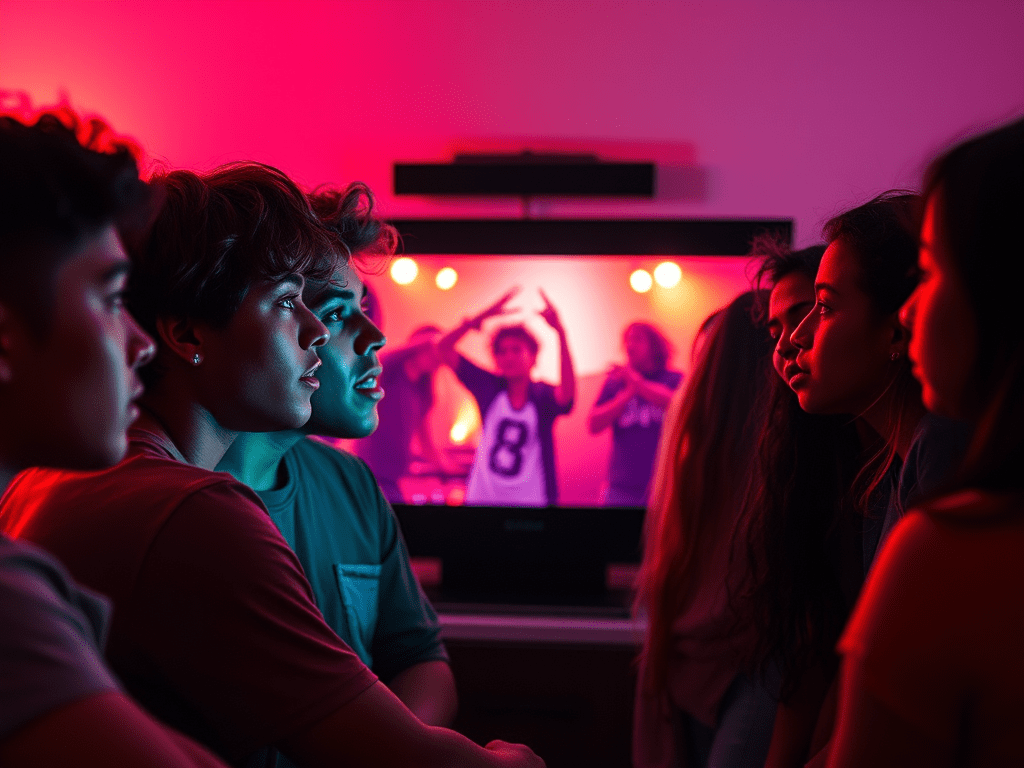
The Power of Media on Youth: Media plays a significant role in shaping the perceptions and behaviors of young people, particularly those aged 12 to 19. Music videos, video games, and movies often portray alcohol, drugs, and sexual behavior in ways that can influence youth attitudes and actions, potentially leading to risky behaviors.
Alcohol and Drugs in Media:
- Music Videos: Often glamorize alcohol and drug use, presenting them as symbols of success, freedom, or rebellion. The repetitive exposure to such content can normalize these behaviors, making them seem acceptable or even desirable.
- Movies: Frequently depict substance use as a way to cope with stress, have fun, or fit in with peers. Characters engaging in these behaviors often face few consequences, which can mislead young viewers about the risks involved.
- Video Games: Some games include scenarios where characters use drugs or alcohol to gain advantages or rewards, further desensitizing players to the dangers of substance abuse.
Sexual Content in Media:
- Music Videos: Often sexualize performers and include explicit content, which can shape young people’s understanding of relationships and sexuality. This portrayal can lead to unrealistic expectations and pressures regarding sexual behavior.
- Movies: Frequently depict casual sexual encounters without addressing the emotional or physical consequences. This can influence youth to engage in risky sexual behaviors without fully understanding the potential repercussions.
- Video Games: Some games include sexual content or themes, which can affect players’ perceptions of gender roles and relationships, potentially leading to unhealthy attitudes and behaviors.
Impact on Youth: The portrayal of alcohol, drugs, and sex in media can have significant effects on young people, including:
- Normalization of Risky Behaviors: Repeated exposure to these behaviors can make them seem typical or harmless, increasing the likelihood of experimentation.
- Influence on Attitudes and Beliefs: Media can shape young people’s beliefs about what is acceptable or expected in terms of substance use and sexual behavior.
- Peer Pressure and Identity Formation: As adolescents seek to establish their identities, they may mimic behaviors seen in media to fit in with peers or express themselves.
Conclusion: It’s crucial for parents, educators, and policymakers to be aware of the media’s influence on youth and to encourage critical thinking and media literacy. By fostering open discussions and providing accurate information, we can help young people make informed decisions and resist negative media influences.
 HEALTHYOU Blog